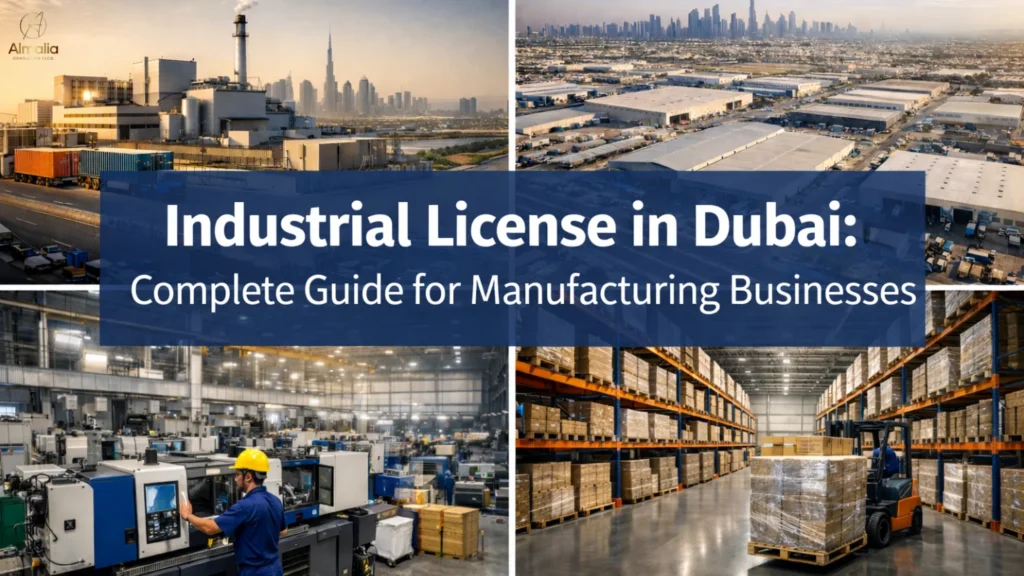
Industrial License in Dubai: Complete Guide for Manufacturing Businesses
Dubai is one of the most preferred destinations in the UAE for manufacturing and industrial investment. With world-class infrastructure, investor-friendly regulations, and seamless access to global markets, the emirate offers an ideal ecosystem for production-based businesses. To legally operate any manufacturing or industrial activity, obtaining an industrial license in Dubai is mandatory.
This SEO-optimized blog explains everything you need to know about an industrial license in Dubai while naturally integrating key compliance and advisory services offered by Almalia Consulting, including business setup, corporate tax, VAT, accounting, and regulatory compliance in the UAE.
What Is an Industrial License in Dubai?
An industrial license in Dubai is a legal authorization issued to companies engaged in manufacturing, processing, assembling, or industrial production activities. It allows businesses to transform raw materials into finished or semi-finished goods within the UAE in accordance with regulatory and safety standards.
For mainland businesses, the license is issued by the Dubai Department of Economy and Tourism, while free zone industrial licenses are granted by respective free zone authorities.
Any company involved in production, fabrication, or industrial processing must secure an industrial license in Dubai before commencing operations.
Why an Industrial License in Dubai Is Important
An industrial license in Dubai ensures that your manufacturing business operates legally and remains compliant with UAE laws. It also enables businesses to register for UAE Corporate Tax, complete Corporate Tax Registration UAE, and manage Corporate Tax Filing UAE in line with current regulations.
Additionally, holding a valid industrial license in Dubai is essential for:
Opening a corporate bank account
Completing VAT registration and VAT return filing UAE
Applying for government approvals and industrial incentives
Maintaining long-term regulatory compliance
Activities Covered Under an Industrial License in Dubai
An industrial license in Dubai covers a wide range of manufacturing and production activities, including:
Manufacturing and production of goods
Assembly and fabrication operations
Processing and packaging units
Industrial recycling and waste processing
Food and beverage manufacturing
Textile, garment, and apparel production
Metal, plastic, and chemical manufacturing
Machinery and equipment manufacturing
Each industrial license in Dubai is activity-specific, and businesses must operate strictly within the approved scope.
Mainland vs Free Zone Industrial License in Dubai
Mainland Industrial License in Dubai
A mainland industrial license in Dubai is issued by the Dubai Department of Economy and Tourism and allows businesses to operate across the UAE market.
Key advantages:
Direct trading within the UAE
Eligibility for government and private sector contracts
Suitable for large-scale manufacturing and distribution
Mainland manufacturers often require ongoing accounting and bookkeeping, financial statement preparation, and monthly MIS reporting to stay compliant.
Free Zone Industrial License in Dubai
A free zone industrial license in Dubai is issued by authorities such as Dubai Industrial City.
Key advantages:
100% foreign ownership
Customs duty benefits on imports and exports
Ideal for export-oriented manufacturing businesses
Free zone manufacturers also benefit from structured VAT consultancy services, VAT deregistration UAE (if applicable), and tax representation services.
Requirements for an Industrial License in Dubai
To obtain an industrial license in Dubai, businesses must meet several regulatory requirements:
Finalized industrial activity
Trade name reservation and initial approval
Factory or warehouse lease agreement
Machinery and equipment details
Environmental and safety approvals
Approval from the Ministry of Industry and Advanced Technology
Feasibility study and production plan
Post-licensing, businesses must complete VAT registration UAE, Corporate Tax Registration UAE, and maintain proper account reconciliation and financial reporting.
Cost of an Industrial License in Dubai
The cost of an industrial license in Dubai depends on:
Dubai Mainland or free zone jurisdiction
Type of industrial activity
Size of factory or warehouse
External approvals and inspections
On average, the cost of an industrial license in Dubai ranges between AED 25,000 and AED 50,000, excluding costs related to corporate tax compliance, VAT return filing, and outsourced accounting services.
Benefits of an Industrial License in Dubai
Obtaining an industrial license in Dubai offers significant long-term advantages:
Strategic location connecting global markets
Advanced logistics and industrial infrastructure
Business-friendly tax environment
Government support for manufacturing growth
Eligibility for CFO services, financial reporting, and consolidated financial statements
Strong credibility with banks, suppliers, and investors
These benefits make Dubai a powerful base for industrial expansion in the UAE.
Step-by-Step Process to Get an Industrial License in Dubai
Select the industrial business activity
Choose mainland or free zone jurisdiction
Reserve trade name
Obtain initial approval
Secure industrial premises
Obtain regulatory approvals
Apply for the industrial license
Complete VAT and corporate tax registrations
Professional support ensures seamless business setup in Dubai, timely approvals, and full compliance.
Ongoing Compliance After Getting an Industrial License in Dubai
Once licensed, industrial businesses must comply with:
VAT return filing UAE and VAT compliance
Accounting and bookkeeping services
Financial statements and MIS reporting
Business bank account opening and KYC updates
Failure to meet these obligations may result in penalties or operational disruptions.
Conclusion
An industrial license in Dubai is the foundation of a legally compliant and scalable manufacturing business. From licensing and approvals to corporate tax advisory services, VAT consultancy, and outsourced accounting, every stage requires precision and regulatory alignment.
With its strategic location, robust infrastructure, and supportive policies, Dubai remains a top choice for industrial investors. Partnering with Almalia Consulting ensures your industrial license in Dubai is supported by complete compliance, financial clarity, and long-term business sustainability.